



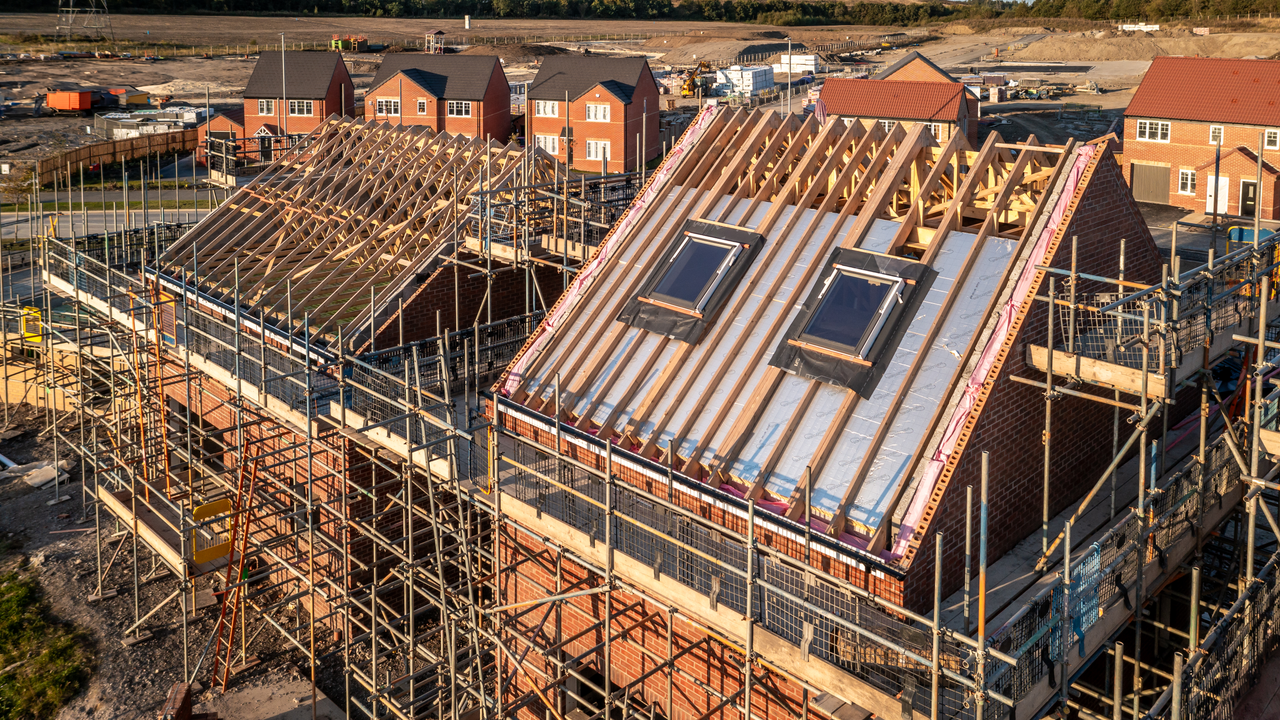
Fairgrove (East Midlands) has entered administration, putting the finances behind its Swanwick Fields housing scheme under scrutiny. For businesses supplying or competing with house builders, the news raises a practical question: how widespread is financial weakness among the companies they depend on?
Plimsoll’s House Builders Industry Analysis gives that question some scale. Of the 1,861 leading UK companies covered, 686 are flagged as being in danger, equivalent to 36.9% of the report population. Average sales growth is just 0.3%. There are successful businesses within this market, but the figures suggest that directors should be selective about where they place their confidence.
The company behind Swanwick Fields
TheBusinessDesk reported on 30 October that PKF Littlejohn partners James Sleight and Paul Williams had been appointed joint administrators of Fairgrove (East Midlands), the company behind the development near Alfreton. It reported net liabilities of £1.6m in the company’s 2024 accounts.
The scheme had previously attracted substantial funding. In October 2021, MSP Capital announced an £11m refinancing loan for the 43-home development. At that point, completion was expected in the second half of 2022. The latest report says work on the final plots had stopped before the administrators arrived.
PKF Littlejohn said the failure was not believed to affect other developments or activities carried out by connected entities. It also highlighted pressures facing residential developers, including labour, materials and energy costs, planning delays and borrowing costs.
For a supplier, the distinction between connected companies matters. Checking the legal entity on the contract is an essential starting point when assessing exposure. A familiar trading name can cover businesses with very different financial positions.
How much financial pressure are house builders under
The Plimsoll figures show why that scrutiny deserves to extend beyond the company making the headlines. Repeated losses sit alongside weak average growth, leaving a substantial group of businesses with reason to examine their financial resilience.
|
Measure |
Latest finding |
|
Companies flagged as in danger |
686 |
|
Companies loss-making for a second consecutive year |
463 |
|
Average sales growth |
0.3% |
|
Companies with falling sales |
791 |
|
Companies with rising sales |
760 |
|
Companies with sales growth above 10% |
193 |
Source: Plimsoll House Builders report, checked 2 November 2026. Figures refer to the latest available financial data for the companies covered; categories can overlap.
The 463 businesses recording a second consecutive year of losses represent almost a quarter of the report population. For a company already losing money, another delay or cost increase can become harder to absorb. For its suppliers, that can turn a customer’s difficulty into pressure on their own cash flow.
A Danger rating is a reason to investigate financial weakness, rather than a declaration that failure is inevitable. Equally, the loss-making and Danger categories should not be added together: some companies may appear in both.
The commercial implication is to look at the direction of a customer’s finances before increasing the amount of work or credit committed to it. If an overdue balance is growing while profitability weakens, the next order deserves closer attention, however welcome the sales might be.
Where growth and acquisition opportunities remain
The growth figures also resist a simple story of universal decline. Businesses achieving double-digit sales increases are operating alongside those selling less. For a director assessing their own performance, an industry average this close to zero is only the beginning of a useful comparison.
A company growing by 5% might appear comfortably ahead of the market. It still needs to understand whether relevant competitors are growing faster, and whether its additional sales are producing worthwhile profits. Growth bought through unsustainable pricing would offer little comfort when the bills arrive.
The report also identifies 405 companies as highly attractive acquisition prospects. Plimsoll’s Industry Analysis allows directors to examine acquisition attractiveness alongside financial health and company value, helping them decide which businesses merit further investigation.
That is a starting point for assessing a possible purchase. An attractive rating does not mean a company is distressed, available for sale or willing to accept an approach. A buyer would still need to establish the owners’ intentions and examine the business in detail. The opportunity lies in making a considered shortlist before an administration headline dictates the search.
How Plimsoll helps directors assess housebuilding companies
Plimsoll’s Industry Analysis places company accounts alongside assessments of financial health, position and direction. It supports comparisons between competitors, customers and suppliers, with analysis updated as new accounts are filed.
For a builders’ merchant, that could mean examining the financial direction of its largest customers before extending additional credit. A house builder could compare its results with similarly sized competitors to see whether weak performance reflects the wider market or warrants a closer look at its own business. An acquisitive director could investigate companies that fit a chosen region or scale.
Those are different decisions, but each depends on knowing more about a particular company than the industry headline provides. Published accounts also describe an earlier trading period, so current payment behaviour and direct conversations remain important when deciding how much exposure to accept.
Fairgrove’s administration gives directors a reason to revisit those decisions. Explore Plimsoll’s House Builders Industry Analysis to assess the companies you trade with, compare your performance and investigate potential acquisitions.